Gutters Pulling Away From the Fascia Board? What's Loosening Them
Quick Answer: A gutter pulls away from the fascia board when the fasteners lose their grip or the wood behind them stops holding. The usual causes are spikes that have worked loose through repeated freeze and thaw cycles, fascia that has softened from trapped moisture, and heavy loads from debris, standing water, ice, and sliding snow that tug on the gutter every season. Hangers spaced too far apart make each one work harder. Once you see a gap along the top edge, the gutter is already moving, so the first job is finding out whether the fasteners, the wood, or the load is the weak link.
You notice it from the driveway one morning after a windy night. The gutter along the front of the house no longer sits flush against the trim. There is a thin dark line along the top edge where daylight shows through, and one corner seems to lean outward like a door that has dropped on its hinges. Maybe the downspout end looks a little crooked, or a section near the porch has started to bow.
It is tempting to treat that gap as a cosmetic problem and put it off until spring. The trouble is that a gutter rarely drifts away from the house for no reason. Something is pulling on it, something is failing to hold it, or both. In North Jersey, where older homes in Maplewood, South Orange, Millburn, and Montclair carry gutters that have seen decades of heavy leaf drop and hard winters, that something usually builds up quietly for years before the gap becomes visible.
Understanding the Differences
Choosing the wrong method for a surface can cause cracking, stripping, water intrusion, and paint damage. A professional assessment before any cleaning job is essential.
What Is Actually Holding Your Gutter Up
It helps to know what the connection looks like before you can judge what has loosened. On many older homes, the gutter was attached with long nails called spikes, driven through the front of the trough, through a metal or plastic tube called a ferrule that keeps the gutter from crushing, and into the fascia board. Newer systems often use hidden hangers, which clip inside the trough and screw into the fascia or the rafter tails behind it.
Either way, the whole assembly depends on one thing: fasteners biting into solid wood. A gutter is not a decorative trim piece. A full trough is a long, heavy channel holding water, grit, and wet leaves, and every fastener along the run carries a share of that weight. The wood is what takes the load in the end. If the fastener loosens or the wood gives way, the gutter starts to rotate outward at the top, which is the gap you see.
The Slow Culprit: Freeze and Thaw Cycles
Spikes are the most common fastener to fail on older homes, and the reason is weather. Water gets into the small hole around each spike. When temperatures drop, that water freezes and expands slightly, nudging the spike outward. When it thaws, the spike does not slide back in. After enough cycles, a spike that was driven tight decades ago can sit a fraction of an inch proud of the board, holding the gutter loosely instead of firmly.
North Jersey gets plenty of those cycles. A winter that swings between a freezing night and a mild afternoon, over and over, is harder on fasteners than a steady cold stretch. By the time you notice a gap, dozens of small movements have already happened.
Why a Loose Spike Rarely Stays Loose Alone
One spike backing out puts extra weight on its neighbors. They then work a little looser, which passes more load along the run. This is why a gutter that is pulling away often starts at one spot and then spreads in both directions, sometimes over a single season. A gap that was barely visible in the fall can be obvious after the first heavy snow.
Tip: On a dry day, stand on the ground and look along the top edge of the gutter from a low angle, then look again from the end of the house. A straight run that suddenly bows outward at one point is showing you where the first fasteners let go, and that is where to focus a closer inspection.
Understanding the Differences
Choosing the wrong method for a surface can cause cracking, stripping, water intrusion, and paint damage. A professional assessment before any cleaning job is essential.
When the Fascia Is the Real Problem
Sometimes the fasteners are fine and the wood is not. Fascia board sits at the very edge of the roof, directly behind the gutter, and it takes a lot of moisture. Water that overflows, runs behind the trough, or splashes back from ice can soak into the board and stay there, because the gutter shades it from sun and wind.
Over time, damp wood softens. A screw or spike that once bit into firm board now sits in fibers that crumble when pressed. The fastener has not moved much, but the wood around it no longer holds, and the gutter pulls free with it. This is the situation where simply hammering a spike back in, or driving a longer screw into the same hole, buys a few weeks at best.
You can test for it without any special tools. Press the tip of a screwdriver into the fascia near the gap. Solid wood resists. Wood with rot feels spongy, comes away in flakes, or lets the screwdriver sink in with little effort. Peeling paint right at the roof edge and dark staining below the gutter are further hints that moisture has been collecting there.
Rafter Tails Are Often the Better Anchor
On many homes the fascia is a relatively thin board nailed to the ends of the rafters, which are called rafter tails. Fasteners that reach back into those rafter tails hold far better than fasteners that rely only on the fascia. Older installations often did not reach them, which means the gutter has been hanging from thin trim wood for its entire life. If your gutter is pulling away, ask whether the hangers are anchored to something solid behind the board.
The Loads That Keep Pulling
Even good fasteners in sound wood have limits. Four sources of weight put steady strain on a gutter, and in North Jersey all four show up.
First is debris. A gutter packed with wet oak, maple, and sycamore leaves, plus the grit that washes off the roof, weighs far more than the empty trough. If you have mature trees near the house, the buildup can happen within weeks in October and November.
Second is standing water. A gallon of water weighs a little over eight pounds, and a clogged or sagging section can hold many gallons. That weight pulls down and outward on every fastener, and it does so on the days when the gutter is already least able to drain.
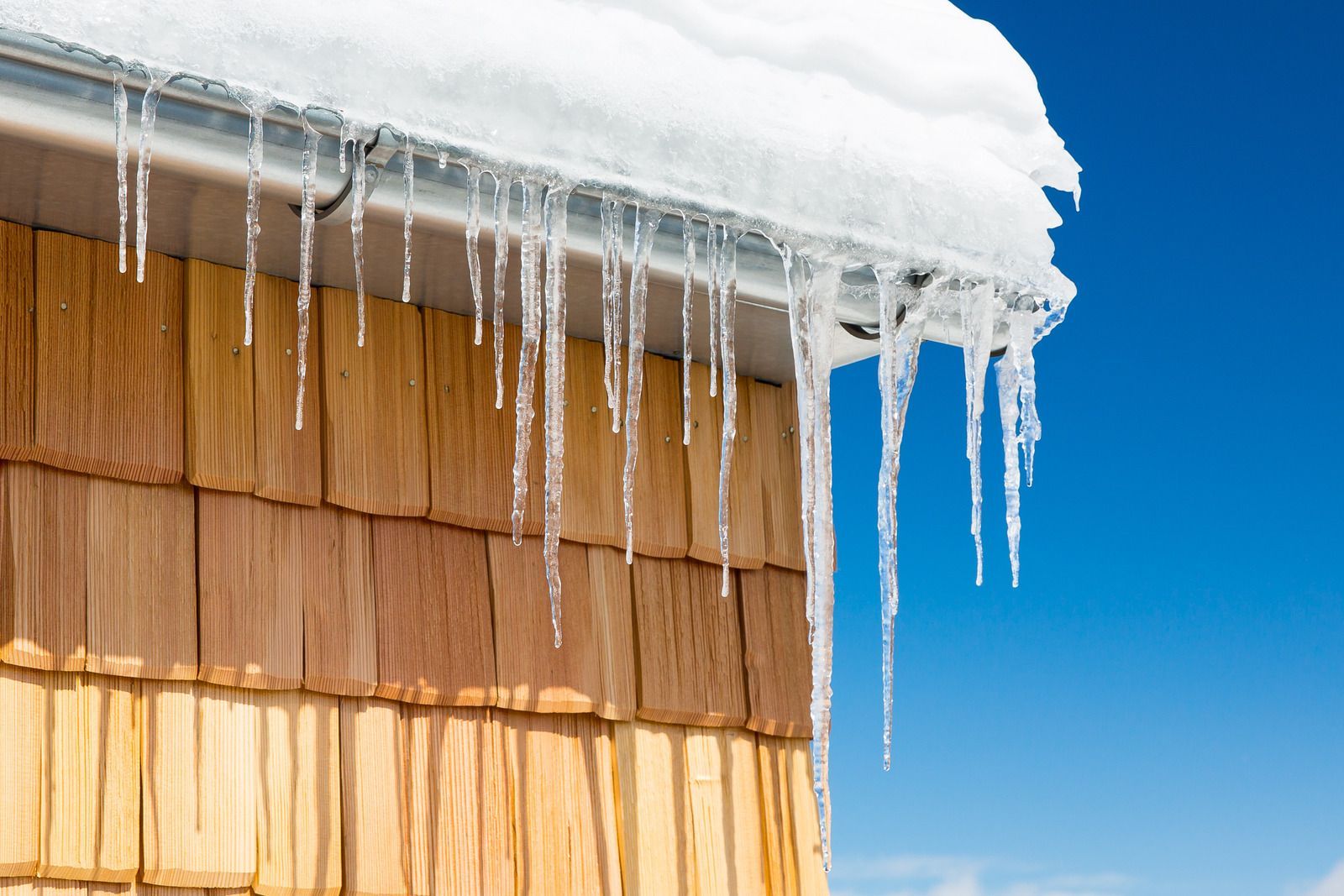
Third is ice. Water that freezes in the trough turns into a solid block that does not flex and does not shed. It also expands as it freezes, pushing the sides of the gutter outward and leaning on the hangers.
Fourth is sliding snow and ice from the roof. When a layer lets go all at once, it can hit the gutter with a sudden jolt. A gutter that has been holding on by loose fasteners can be dragged several inches in a single storm.
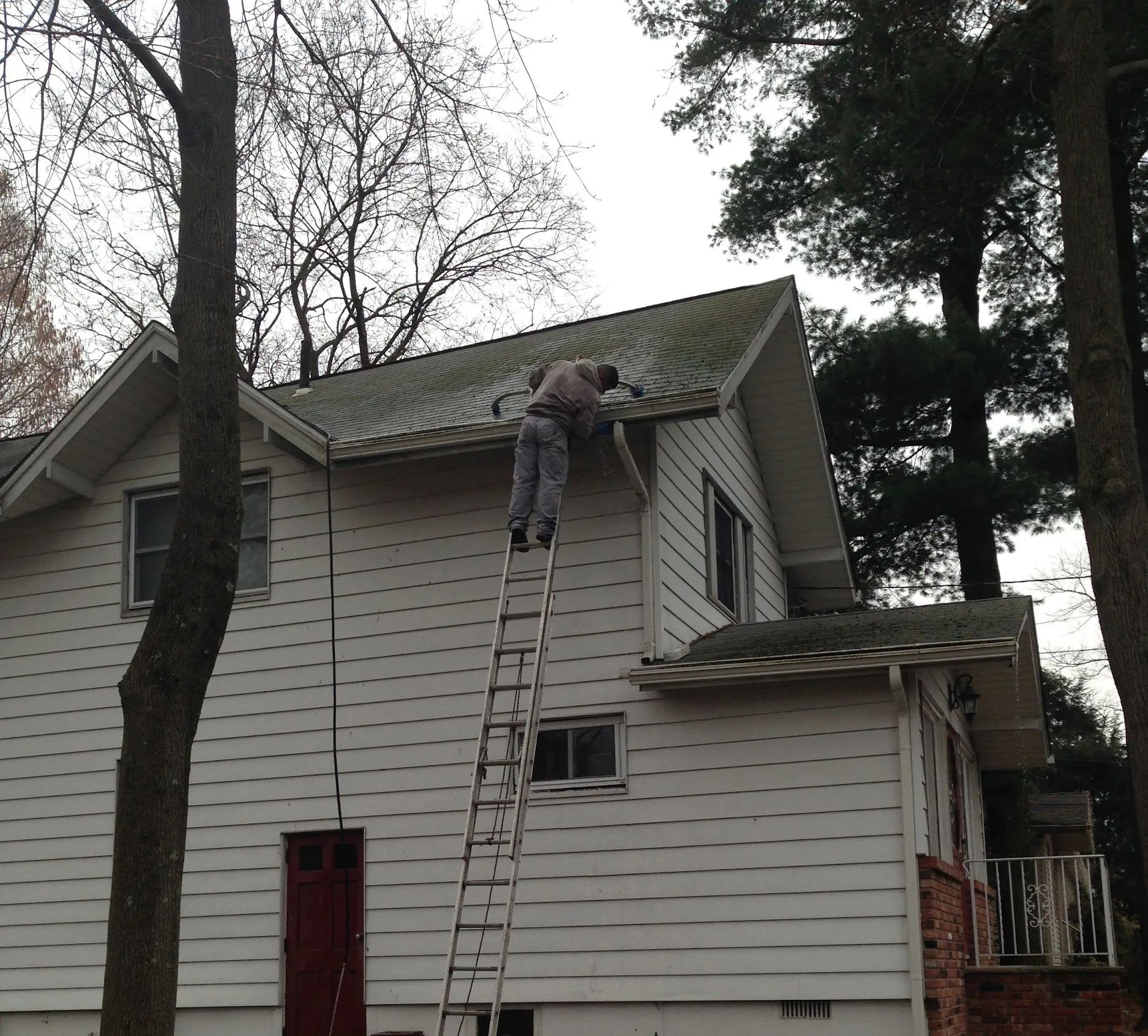
Warning: Do not lean a ladder directly against a gutter that is already pulling away. The trough is not built to carry a person, and a loose section can twist or give way under the load, which is one of the more common causes of ladder falls during gutter work.
Understanding the Differences
Choosing the wrong method for a surface can cause cracking, stripping, water intrusion, and paint damage. A professional assessment before any cleaning job is essential.
Spacing, Age, and Installation Details
Not every loosening gutter was neglected. Some were set up in a way that left little margin. Hangers placed three or four feet apart, rather than closer together, leave long stretches of trough carrying weight with fewer anchors, and each one has to do more. Spikes driven into the same hole during earlier repairs enlarge the opening until it no longer grips. Mixing metal types, such as steel fasteners in aluminum gutters, can also cause corrosion that weakens the connection at the contact point.
Age matters too. Thermal movement is a quiet factor. Aluminum expands and contracts with temperature swings faster than the wood behind it, and over many seasons that small difference works fasteners and holes slightly larger. A gutter that is thirty years old may have been tightened and loosened more times than anyone could count.
Understanding the Differences
Choosing the wrong method for a surface can cause cracking, stripping, water intrusion, and paint damage. A professional assessment before any cleaning job is essential.
A Quick Way to Sort Out What You Have
You can narrow the cause in a few minutes without climbing anything. Walk the whole perimeter and write down where the gaps appear. If they sit near a downspout or a low spot, weight and standing water are likely involved. If they cluster on the north side or under deep eaves, moisture and rot are more likely. If they appear evenly along a long run, hanger spacing and aged fasteners are the more probable explanation.
Then check the other clues. Water marks on the fascia below the gutter point to leaks behind the trough. Rust streaks or drips at seams suggest the run has been flexing. Granules and grit pooled in the gutter can mean the roof edge is shedding more than usual. None of these proves the cause alone, but together they tell a story about how the gutter ended up where it is.
Understanding the Differences
Choosing the wrong method for a surface can cause cracking, stripping, water intrusion, and paint damage. A professional assessment before any cleaning job is essential.
What a Lasting Repair Looks Like
A repair that holds has a clear order. The gutter is first cleaned out so the true weight and condition of the trough can be seen. The loose section is then supported while the fascia is inspected, and any soft or rotted board is replaced before anything is refastened, because new fasteners cannot hold in wood that has already failed. Old spikes and ferrules are removed. In their place go hangers that reach into solid wood, usually the rafter tails, spaced closely enough to carry a full trough. The run is then checked for slope so water moves toward the downspout instead of sitting and loading the fasteners again.
Where the gutter has bent or kinked from being dragged, that section may need to be reshaped or replaced so it sits flush. Where ice repeatedly drags the same corner, the roof edge and drainage often need attention too, since fixing the fasteners without reducing the load only resets the clock.
This kind of work is easy to get wrong from a ladder. Holding a long section level with one hand while driving a fastener with the other, at height, on a house with a steep or multi story roofline, is where a simple fix turns into an injury or a bent gutter.
Frequently Asked Questions
Why is my gutter pulling away from the fascia?
Most often the fasteners have backed out through freeze and thaw cycles, the fascia has softened from moisture, or heavy loads from debris, water, ice, and snow have been tugging on the gutter. Frequently more than one of these is involved.
Can I just hammer the spikes back in?
It can work as a short term measure if the wood is sound and the spike hole is still tight. If the hole is worn or the board is soft, the spike will not hold, and the gutter will loosen again. Replacing the fastener with a hanger that reaches solid wood is the more reliable fix.
How do I know if the fascia is rotted?
Press a screwdriver tip into the board near the gap. Firm resistance is a good sign. If the wood feels spongy, crumbles, or lets the tool sink in easily, it has moisture damage. Peeling paint and dark staining along the roof edge are additional warning signs.
Will gutter guards stop my gutters from pulling away?
Guards can reduce the amount of debris that builds up and adds weight, but they do not repair loose fasteners or damaged fascia. Those problems have to be corrected first, or the guards will simply sit on a gutter that continues to move.
Is it safe to wait until spring to fix it?
Waiting through a North Jersey winter is risky. Ice and sliding snow put the heaviest loads on the gutter at the exact time it is most weakened, and a partial gap can turn into a collapsed section. Having it checked before the first hard freeze is the safer path.
Can a pulled away gutter damage the house?
Yes. Water that no longer enters the trough runs behind it or spills onto the siding, soffit, and foundation area. That moisture speeds up fascia rot, which loosens the gutter further and keeps the cycle going.
Find the Weak Link Before Winter
A gutter separating from the house is telling you that its fasteners, its wood, or its load has fallen out of balance, and the fix depends on which one gave way first. Worn spikes need a hanger that reaches solid wood. Soft fascia needs the board replaced before anything is refastened, because new fasteners cannot grip wood that has already failed. A gutter straining under debris, standing water, and ice needs the load reduced, not just the screws tightened, or the gap simply returns.
Sorting out which weak link is the real one is why a gap along the top edge deserves a closer look rather than a quick hammer and a hope. Mack Glass And Gutters
has spent 15
years diagnosing these failures for homeowners across Maplewood, NJ, where freeze and thaw cycles and heavy leaf drop work on a gutter for years. A
gutter that sits flush through a hard winter is rarely luck. It comes from fixing the cause before the first snow tests a connection that has already started to let go.