Water Pouring Behind the Gutter Instead of Through It? Why the Pitch Is Off
Quick Answer: When water runs down behind a gutter instead of flowing through it, the gutter is usually failing in one of three ways. The run has lost its slope toward the downspout so water pools and backs up against the rear wall, the hangers have loosened so the gutter leans away from the fascia and opens a gap, or the roof edge has no flashing that carries runoff past the fascia and into the trough. Pitch is the most common starting point because a gutter that holds water gets heavy, pulls on its fasteners, and slowly creates the gap that lets the rest of the water slip behind it. A quick hose test and a look at the back edge will tell you which problem you have.
You step outside during a steady rain and notice something odd. The
gutter itself looks fine from the driveway, but a dark stripe of water is sliding down the fascia board, running behind the trough, and dripping off the bottom of the soffit. Maybe it lands on the porch rail, or on the same patch of siding it always seems to find. The water is not going through the gutter. It is going around it.
That detail matters, because it points to a different set of causes than a simple clog. A gutter that overflows over the front lip is usually full of leaves. A gutter that leaks behind itself is telling you something about how it sits against the house, how the roof edge hands water off to it, and whether the whole run still slopes the way it was meant to. In many North Jersey homes, especially the older ones in Maplewood, South Orange, and Montclair, that combination has had decades of ice, leaf loads, and ladders to work against it.
Understanding the Differences
Choosing the wrong method for a surface can cause cracking, stripping, water intrusion, and paint damage. A professional assessment before any cleaning job is essential.
How a Gutter Is Supposed to Catch Water
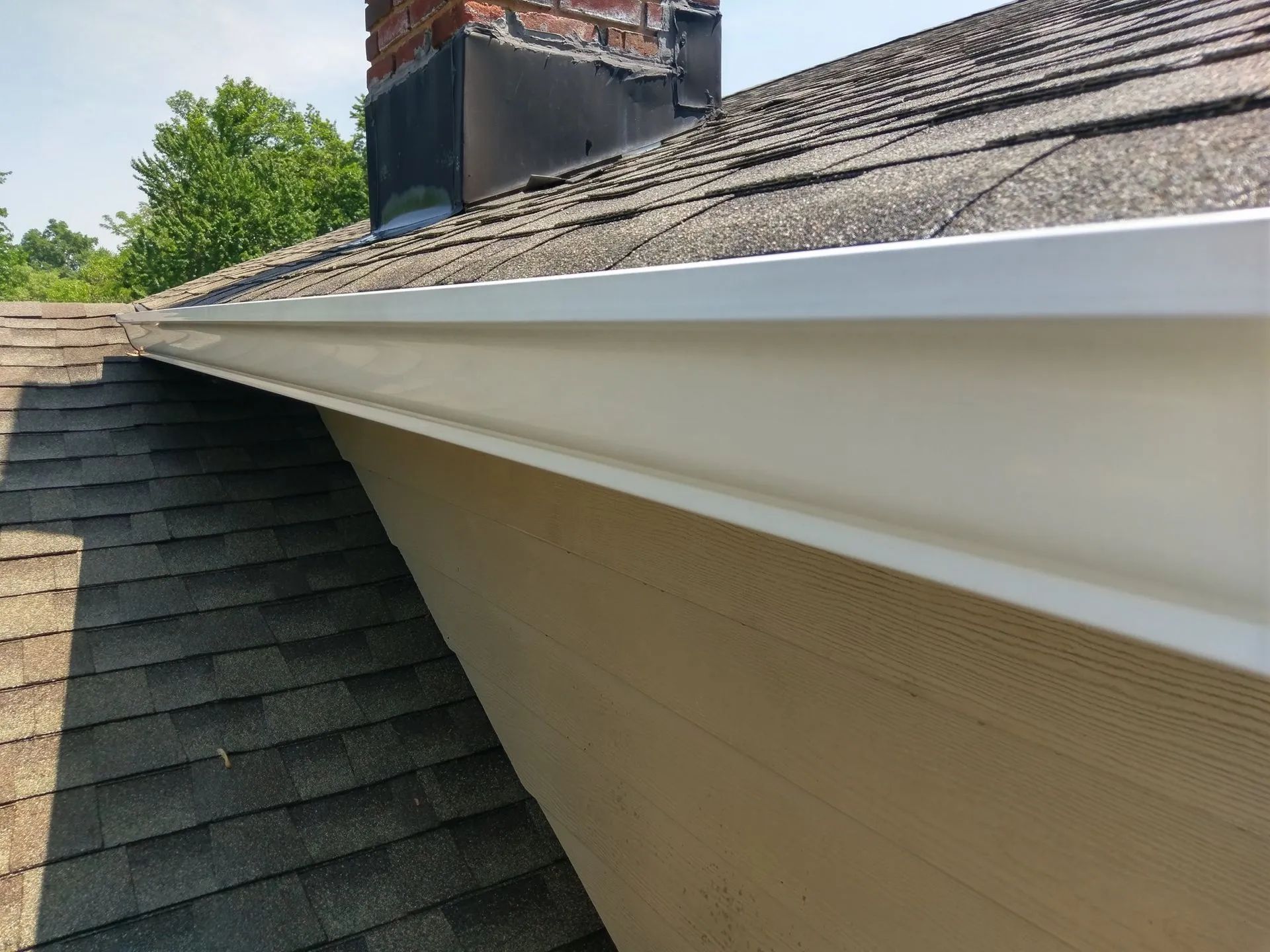
Before you can spot what has gone wrong, it helps to picture the handoff when everything works. Rain runs down the roof deck, crosses the shingles at the edge, and drops into the open trough. A strip of metal called drip edge sits under the shingles at the eave and extends out past the fascia board. Its job is to guide runoff forward and down into the gutter instead of letting it cling to the underside of the shingle and wick back onto the wood.
The gutter hangs from the fascia on brackets or hidden hangers, held snug against the board. The trough is set so it slopes gently toward the downspout, at roughly a quarter inch of drop for every ten feet of run. That is a very small angle, and you cannot see it from the ground. But it is the difference between water moving along the trough and water sitting in it.
Each piece depends on the others. Flashing hands the water off. The hangers hold the gutter close to the fascia. The slope keeps the water moving. When one of the three slips, the other two have to carry more than they were built to, and the water starts looking for a new way out. The easiest route is often the narrow gap between the back of the gutter and the board behind it.
Why Pitch Is Usually Where the Trouble Starts
A gutter that has lost its slope does not look broken. It looks full. After a rain you may see a long, shallow pool sitting in one stretch, or you may find a green film of algae and a layer of grit settled in a low spot while the rest of the run stays clean. Those are the first signs that the water is not travelling to the downspout the way it should.
Here is how that turns into water behind the gutter. Standing water is heavy, and a full trough puts constant downward and outward force on the brackets that hold it. Hangers loosen over time as fasteners work their way out of aging fascia wood. Once a few of them back out, that section of gutter leans slightly away from the board at the top. It does not take much. A gap of an eighth of an inch is enough for runoff to slip into, especially when rain arrives faster than the trough can move it along.
Water that pools also pushes against the rear wall of the trough and against every seam on the way. If the sealant in a joint has hardened, the pressure forces water out of the seam, and it runs down the back face. In this way a pitch problem can show up as a leak somewhere that has nothing to do with pitch at all.
The Low Spot Near the Downspout
Sagging often happens in the middle of a long run, which creates a belly in the trough. Water flows in from both directions, gathers in the belly, and has nowhere to go. In a hard rain that stretch overfills first, and the overflow takes whichever edge is easiest. If the gutter has pulled away from the fascia at that point, the easiest edge is the back one.
Tip: Run a garden hose into the high end of the gutter on a dry day and watch the water travel. It should move steadily toward the downspout without stalling. If it slows, pools, or reverses in a section, you have found a low spot, and that is the stretch to check for loose hangers and a gap at the back.
Understanding the Differences
Choosing the wrong method for a surface can cause cracking, stripping, water intrusion, and paint damage. A professional assessment before any cleaning job is essential.
Other Reasons Water Slips Behind the Trough
Pitch is a common starting point, but it is not the only way water gets behind a gutter. If you have corrected the slope and still see water on the fascia, look at these next.
Missing or Short Drip Edge
On many older homes the drip edge was never installed, or it was installed so short that it stops before it reaches the gutter. Without it, runoff curls under the lip of the shingle and clings to the underside, then runs down the face of the fascia behind the trough. You can often see this as a dark line of staining or peeling paint directly under the shingle edge, running the full length of that side of the house.
A gutter that is correctly pitched and firmly attached can still leak this way. The fix is not in the gutter at all. It is a matter of getting metal in the right place so the roof edge delivers water into the trough instead of past it.
A Gutter Set Too Far From the Fascia
When a gutter is hung with a visible gap between its back and the board, even a perfectly sloped run can let water in. This happens when spikes and ferrules, the old fastening method, have pulled partway out, or when the gutter was hung slightly proud of the fascia to begin with. The gap becomes a channel. Water from the roof edge runs straight into it, and every storm widens it a little.
Fast Water From Roof Valleys
Where two roof planes meet in a valley, runoff gathers speed and arrives at the gutter in a concentrated rush. On a steep or complex roof, that rush can shoot over the trough, or hit the back wall and climb it. If your behind the gutter staining is worst below a valley or below a dormer, that is likely the cause, and the gutter may need a diverter or a deeper profile to catch it.
Ice at the Eave
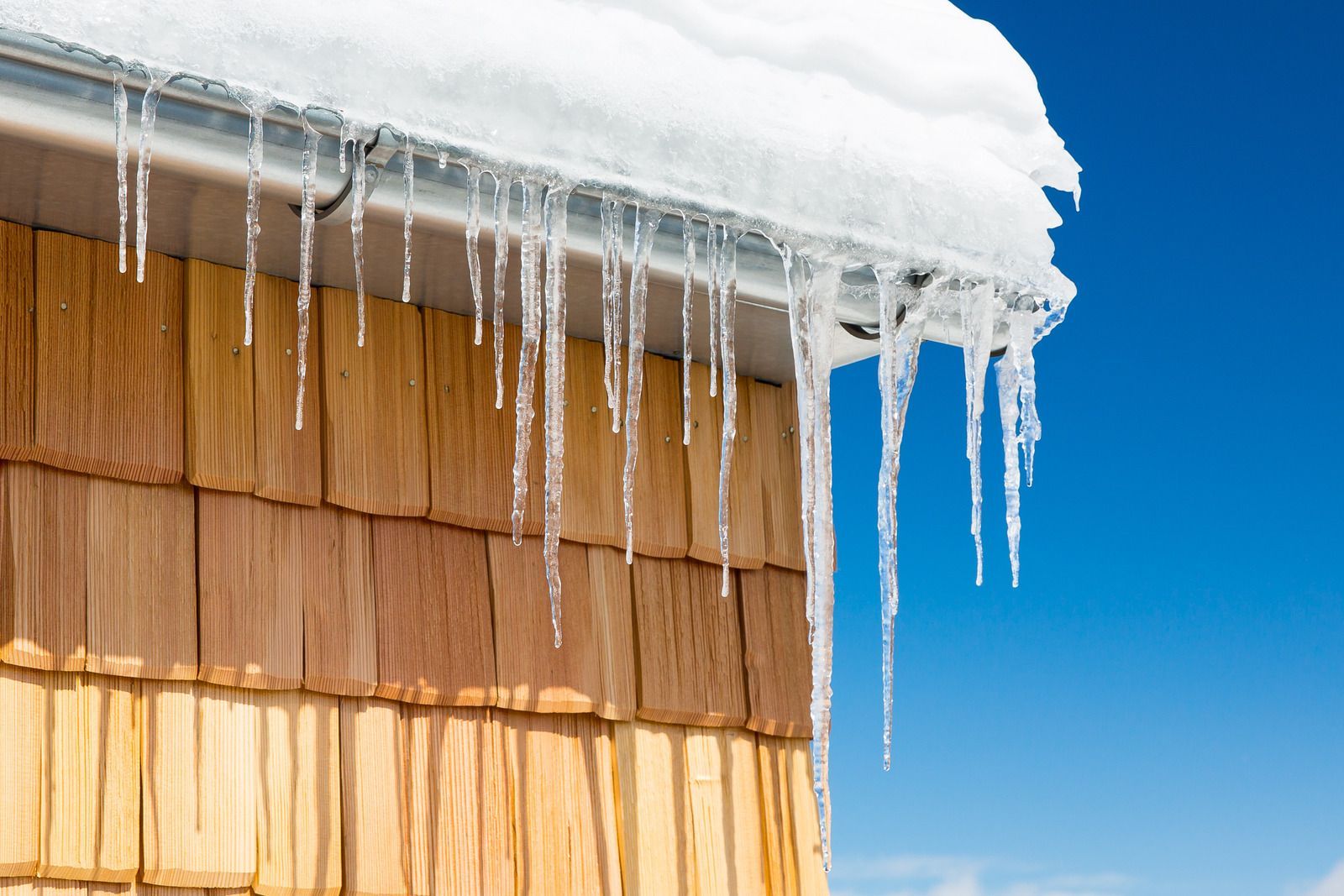
North Jersey winters add one more variable. When meltwater refreezes at the roof edge, the ice builds under shingles and behind the gutter, pushing the trough outward and lifting the drip edge. When it thaws, the gaps it created stay open. A gutter that stayed tight in October may have a quarter inch of space behind it by March.
What Water Behind the Gutter Does to Your House
The reason this is worth chasing down quickly is that the water is landing on the one part of your home that is built to be kept dry. Fascia boards are wood. Behind them sit the rafter tails and the soffit. When water runs down the back of the gutter, it soaks into all of that and stays there, because the trough above it blocks the air and sunlight that would dry it out.
The signs show up slowly. Paint begins to peel in a line just under the roof edge. The wood feels soft when you press a screwdriver tip into it. Soffit panels stain or sag. Eventually the fastener holes in the fascia no longer grip, which loosens the gutter even more and sends the cycle around again.
Warning: Do not caulk the gap between the gutter and the fascia and call the job done. A bead of sealant on the outside of a pitch or hanger problem traps moisture against the wood, hides the rot underneath, and fails the first time the gutter moves. The cause has to be corrected, not covered over.
Understanding the Differences
Choosing the wrong method for a surface can cause cracking, stripping, water intrusion, and paint damage. A professional assessment before any cleaning job is essential.
How to Tell Which Problem You Have
You can learn a lot in ten minutes with a hose and a good look from a stable ladder or from the ground with binoculars. Start by clearing any obvious debris from the trough, since a clog can imitate a pitch problem. Then follow a short sequence.
First, run water into the high end of the gutter and watch where it pools. Standing water that stays after the flow stops marks a low spot. Second, look along the back of the trough for a gap between the gutter and the fascia, and check whether hangers are tight or backing out. Third, with the roof dry, look at the shingle edge. If you can see bare fascia between the bottom of the shingles and the top of the gutter, with no metal bridging the space, the flashing is missing or short.
If water only escapes when the trough is nearly full, the root cause is usually slope or a blockage. If it escapes when the trough is nearly empty, the gap or the flashing is the more likely culprit.
Understanding the Differences
Choosing the wrong method for a surface can cause cracking, stripping, water intrusion, and paint damage. A professional assessment before any cleaning job is essential.
What a Proper Repair Looks Like
A lasting fix goes in order. The gutter is cleaned first so the actual condition of the trough can be seen. Then it is reset so it slopes properly toward the downspout, which usually means releasing the run, lifting low sections, and refastening it to solid wood. Loose spikes are replaced with hangers that bite into the rafter tails behind the fascia instead of relying only on the board. Failed seams are cleaned back to bare metal and sealed fresh. Where the roof edge is bare, drip edge or an apron flashing is added so runoff drops into the trough instead of behind it.
Any soft fascia is checked at the same time. Wood that is only damp can dry out once the water stops. Wood that has gone spongy has to be replaced before the gutter goes back up, or the new fasteners have nothing to hold.
On a two or three story home, or on a roof with a steep pitch, much of this is work at height with a bad angle for tools. Resetting a long run alone, with a ladder leaning on the very gutter you are trying to straighten, is one of the more common ways a simple repair ends in a fall.
Frequently Asked Questions
Why is water running behind my gutter instead of into it?
Usually because the gutter has lost its slope and holds water, has pulled away from the fascia, or sits under a roof edge with no drip edge. Any of the three sends runoff down the back.
How much pitch should a gutter have?
A common guideline is a quarter inch of drop for every ten feet of run toward the downspout. It is a slight angle, so watching how water moves confirms it better than eyeballing from the ground.
Can a gutter look level and still be the problem?
Yes. A run can look straight and still hold a shallow pool in one section, or have a gap at the back you cannot see from below. A hose test on a dry day shows what the eye misses.
Does a missing drip edge mean the gutter has to be replaced?
Not necessarily. Flashing sits at the roof edge and can often be added without replacing the gutter. The gutter may still need to be reset or refastened so the two pieces work together again.
Will gutter guards stop water from getting behind the gutter?
Guards reduce clogs, which helps with overflow, but they do not fix pitch, loose hangers, or a missing drip edge. Those need correcting first, or the guards simply sit on top of the same problem.
How soon should I address water running down the fascia?
Sooner than most people expect. Fascia and soffit wood stays wet behind the trough, so rot can start in a single wet season. Checking the run before winter also keeps ice from widening the gaps.
When the System Stops Working Together
Water slipping behind a gutter is a sign the system has stopped working as one piece, and the fix depends on which piece slipped first. Pitch is usually where it starts, because a trough that holds water grows heavy, pulls on its hangers, and slowly opens the gap that lets the rest of the runoff escape. Flashing, slope, and fasteners each depend on the other two, so reading which one failed is what turns a guess into a repair that actually holds.
The reason to chase it down is that the water lands on the one part of the house meant to stay dry, where rot can start in a single wet season. Mack Glass And Gutters
has spent 15
years resetting runs and sealing roof edges across Maplewood, NJ, and that experience is what separates a lasting fix from a bead of caulk over a hidden problem. Run the hose test, find the stall or the gap, and correct it before the first freeze locks a leaking gutter in place.